The molecular collection

ENCAP C+

Collagen Renewal Cream

the world's first anti-aging serum that delivers vitamin c to your dermis intact — then powers your cells to use it. every other vitamin c serum oxidized before it reached your collagen. this one doesn't.

$ 97.00 USD
(
1554
customer review
)

+

multisal patent-protected

146% vit-c retention

riboxyl atp

  • multisal® nano-encapsulated vitamin c
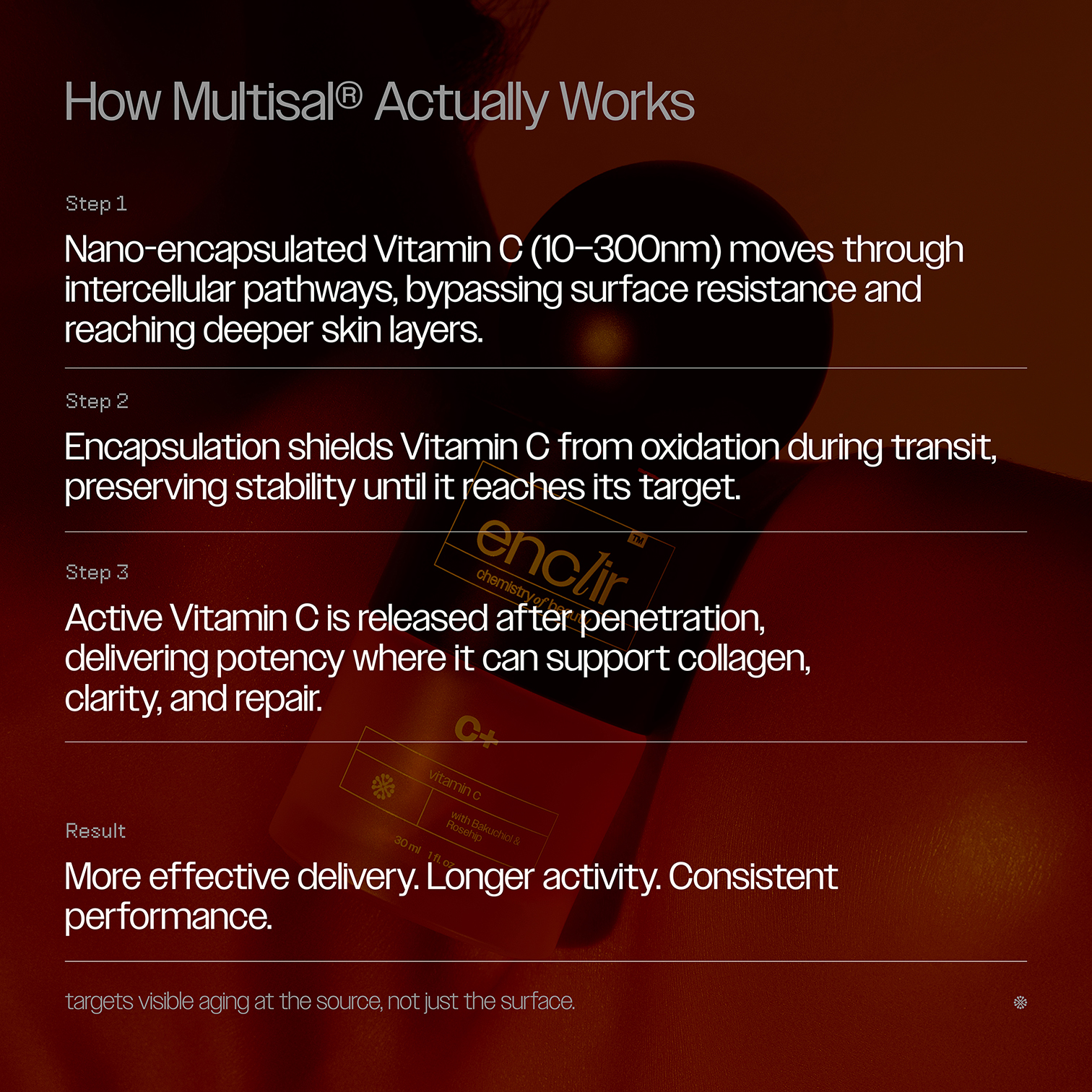
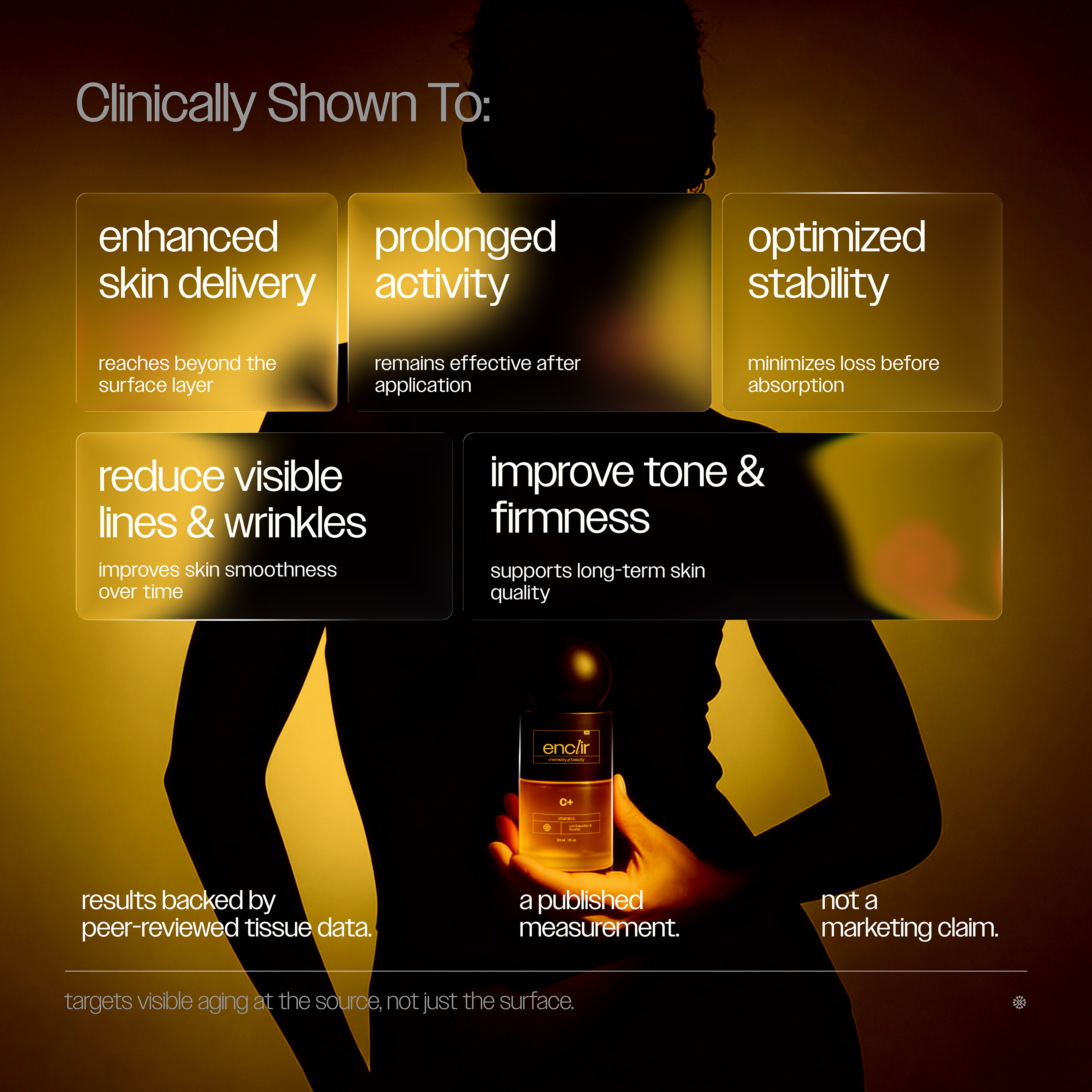
    for the first time, vitamin c arrives at your dermis chemically intact. multisal® encapsulates ascorbic acid in a lipid-compatible, oxidation-proof nano-carrier that traverses the lipid barrier conventional vitamin c cannot cross. published data: 146% greater vitamin c retention in skin tissue versus free ascorbic acid. zero oxidation. zero dha formation. zero free radical generation.
  • riboxyl™ atp cellular energy restoration
    the piece of anti-aging science every other brand has missed. aging fibroblasts have measurably depleted atp reserves — collagen synthesis requires energy, and depleted cells cannot respond even when vitamin c arrives. riboxyl™ (d-ribose, 1%) restores the atp substrate aging fibroblasts need. 94% fibroblast atp levels at 6 weeks from a depleted 18% baseline. published lucas meyer data.
  • retinol results. zero restrictions
    bakuchiol 1% — peer-reviewed head-to-head vs. retinol 0.5% in the british journal of dermatology. equivalent reduction in fine lines, cell renewal rate, and skin evenness. zero photosensitivity. pregnancy-safe. no adjustment period. no purging. no "retinol face." the results without a single one of the consequences.

key actives: multisal® vitamin c 3%, riboxyl™ (d-ribose) 1%, bakuchiol 1%, pisum sativum oligopeptides 2.5%, centella asiatica 5%, cellynkage™ hexapeptide 2%, marine collagen 1%, dual-mw hyaluronic acid, rosehip oil

full inci: aqua, glycerin, multisal® (ascorbic acid, lipid nano-carrier) 3%, d-ribose 1%, pisum sativum extract 2.5%, centella asiatica extract 5%, bakuchiol 1%, hydrolysed collagen 1%, cellynkage™ 2%, sodium hyaluronate (high mw), sodium hyaluronate (low mw), rosa canina seed oil, tocopherol, xanthan gum, phenethyl alcohol. ph 5.5

evening use — 2–3 pumps after cleansing, to clean dry skin. apply before heavier creams or face oils.

can i use with retinol? bakuchiol is the retinol-equivalent in this formula — you do not need additional retinol. stacking with prescription retinoids requires physician guidance.

morning use: this formula is not photosensitising. it can be used morning or evening. for best results, prioritise the evening application when skin repair cycles are most active.
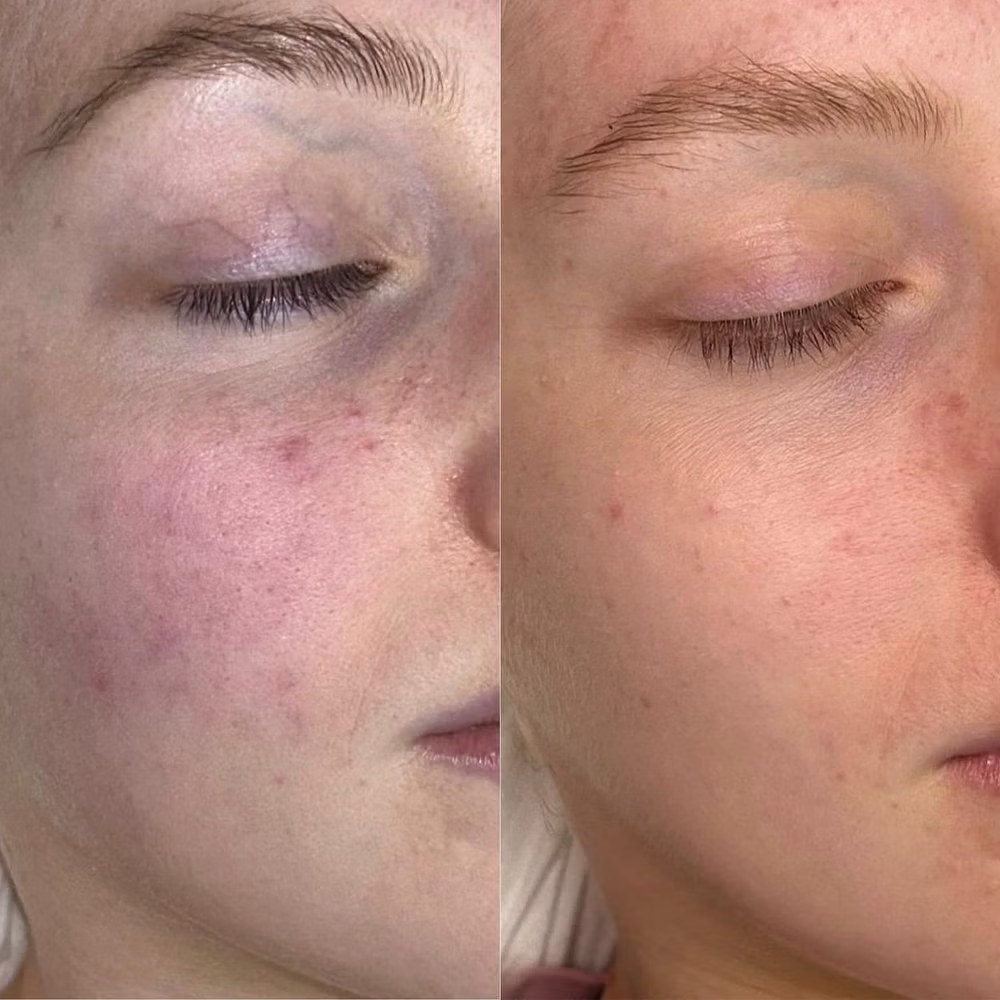
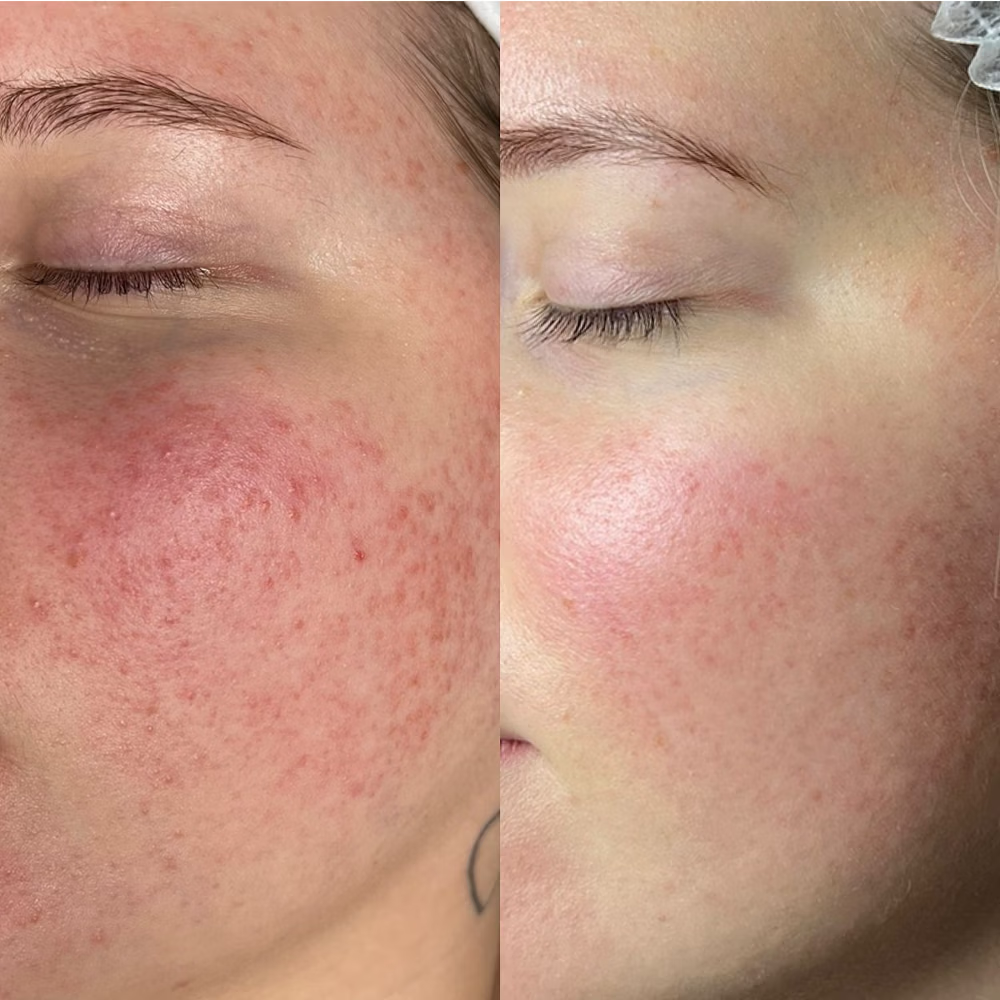
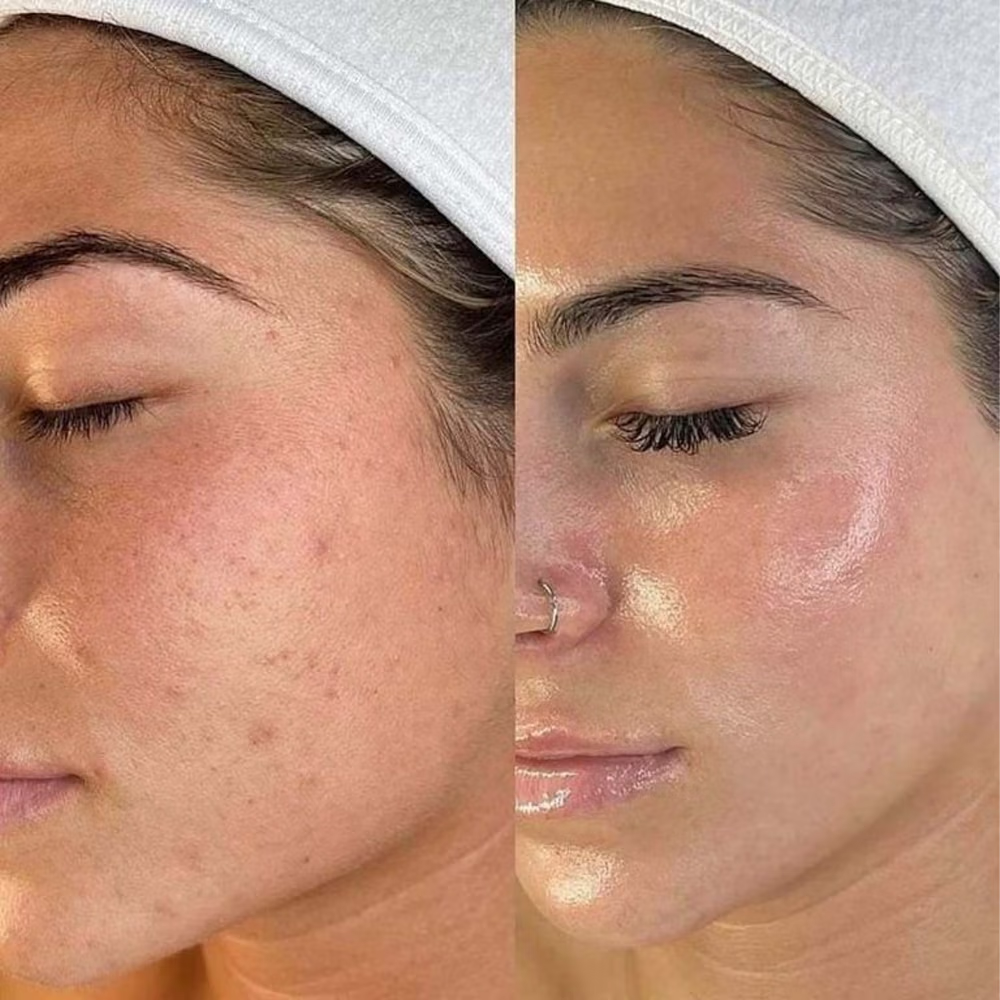
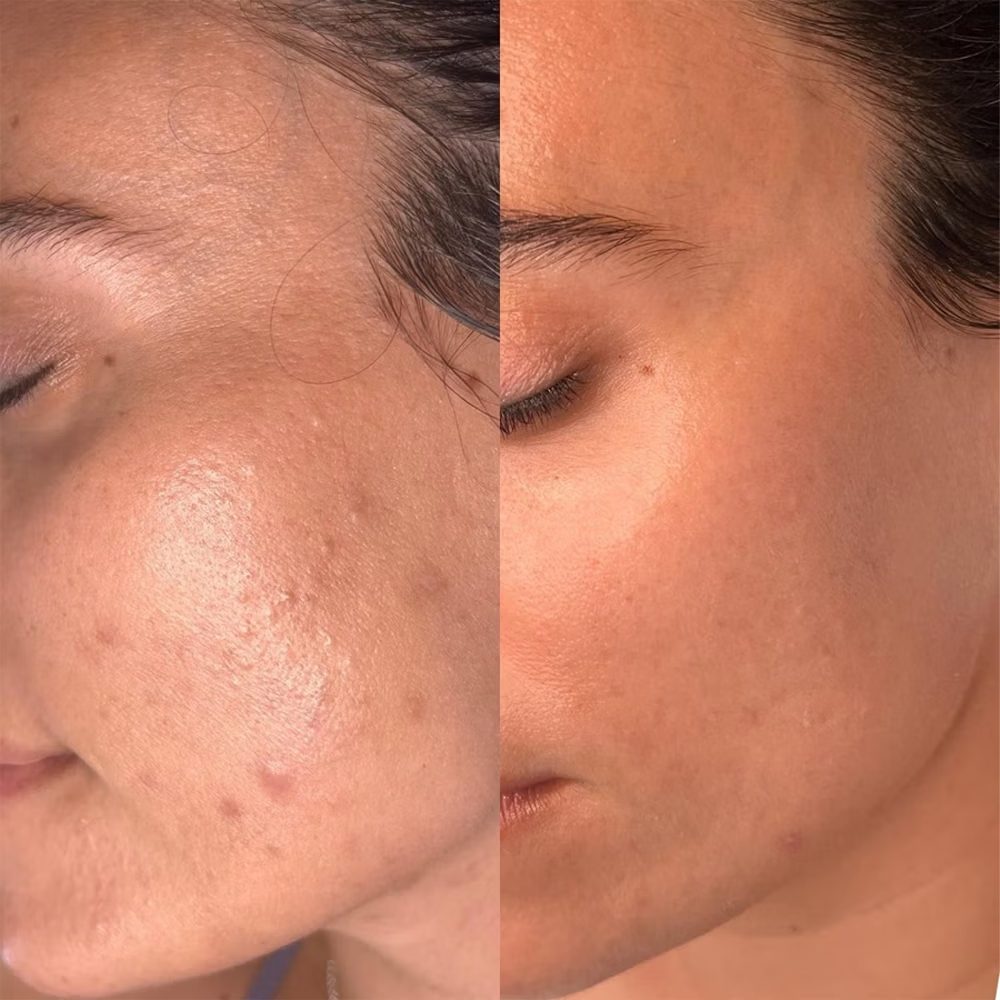
Evidence Based Progression

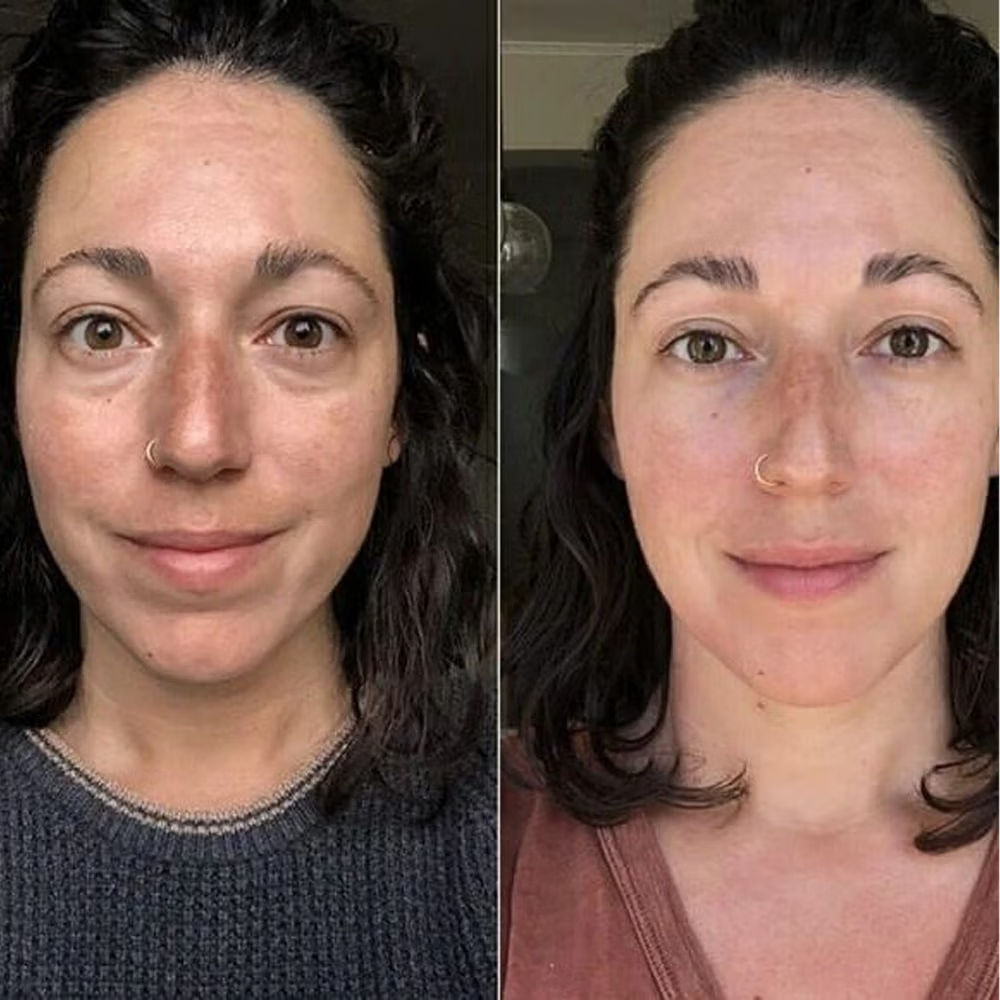
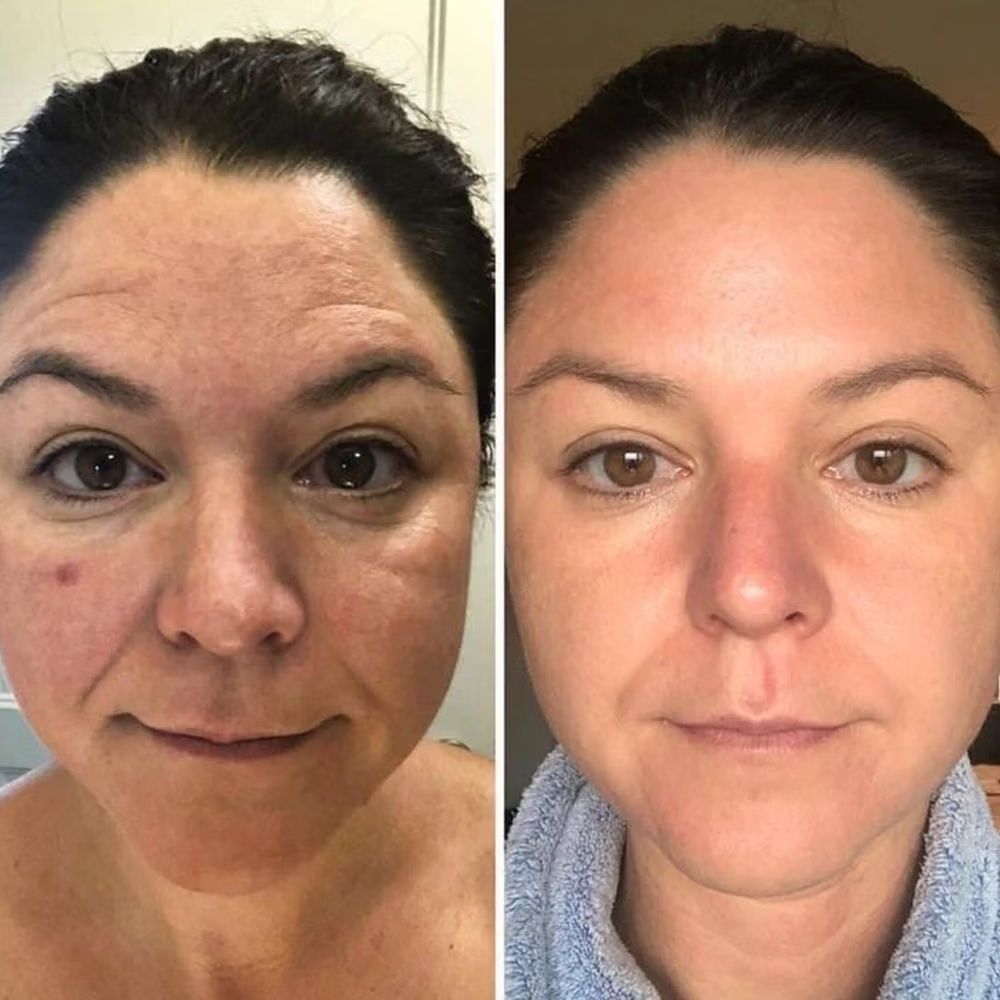
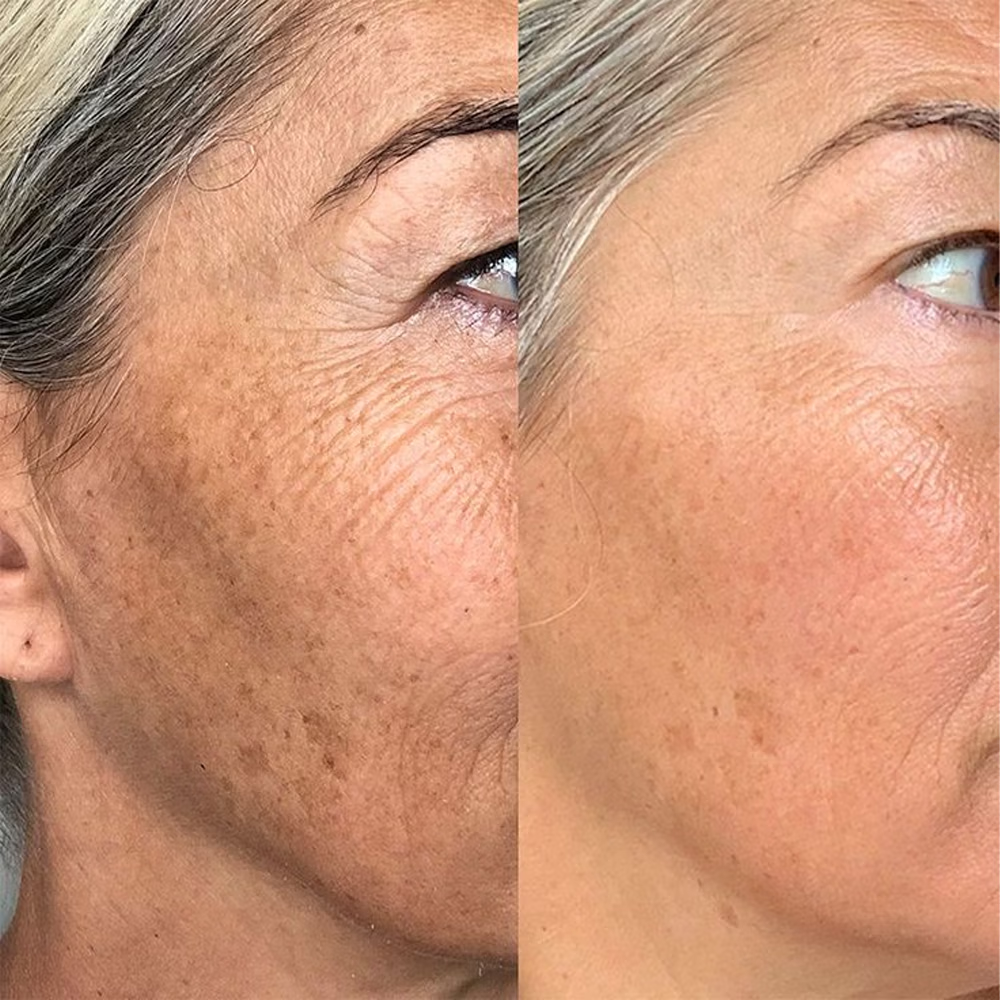
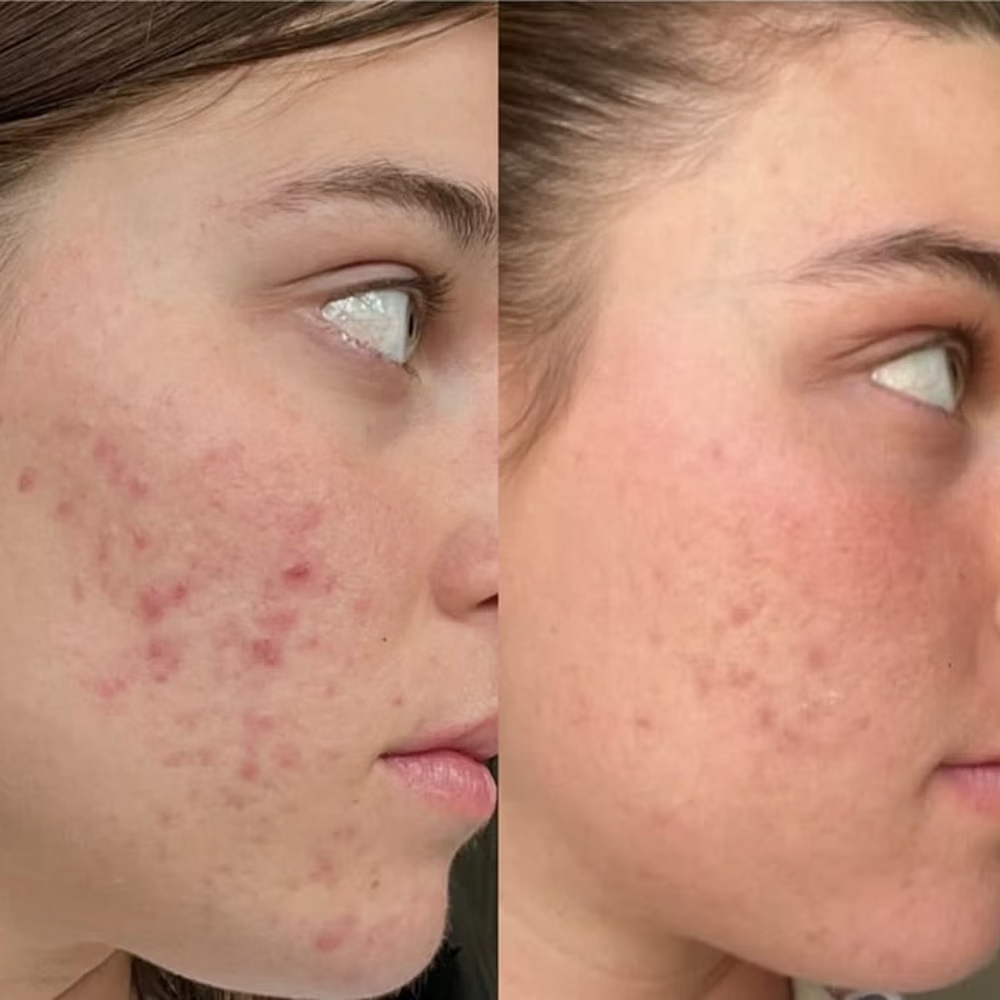
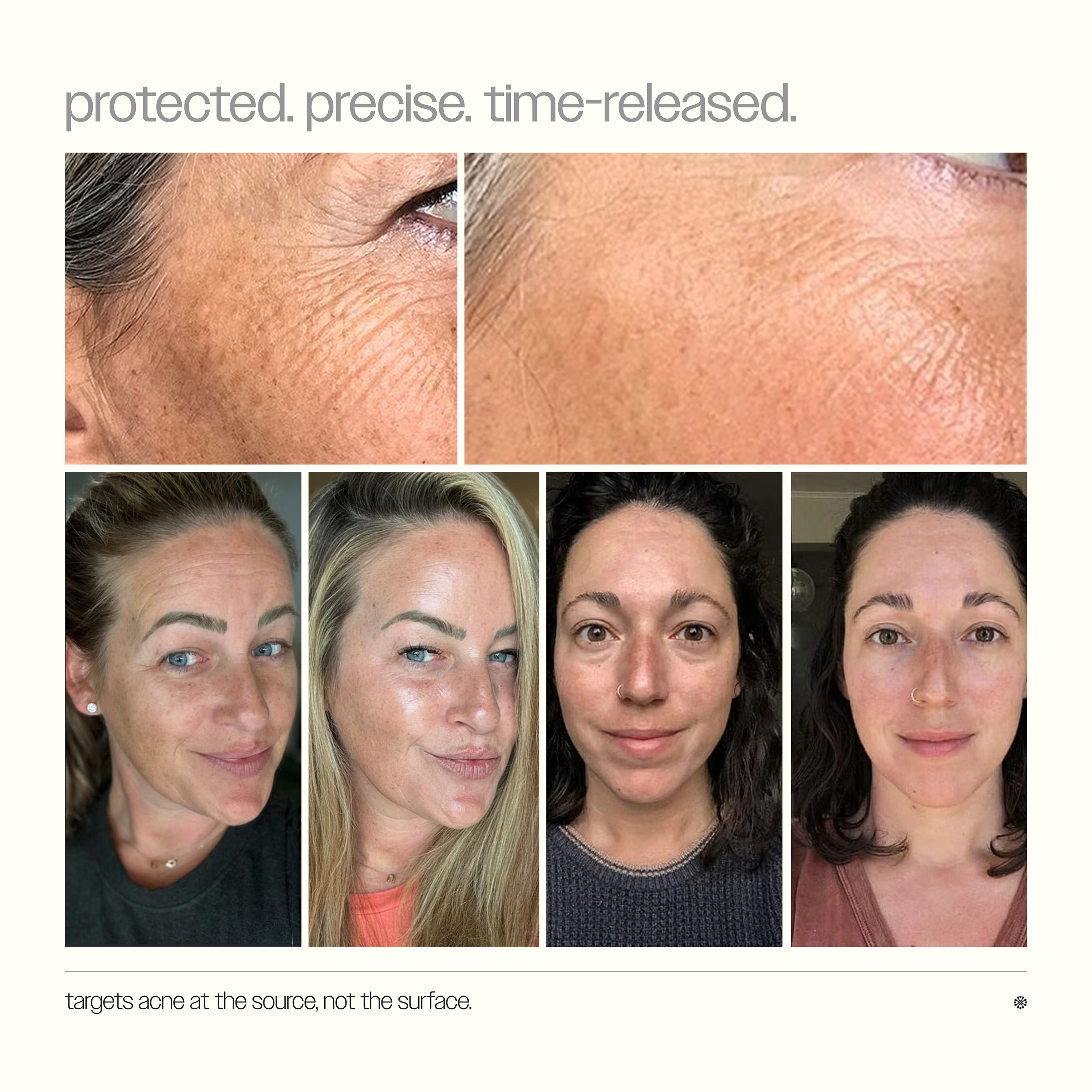
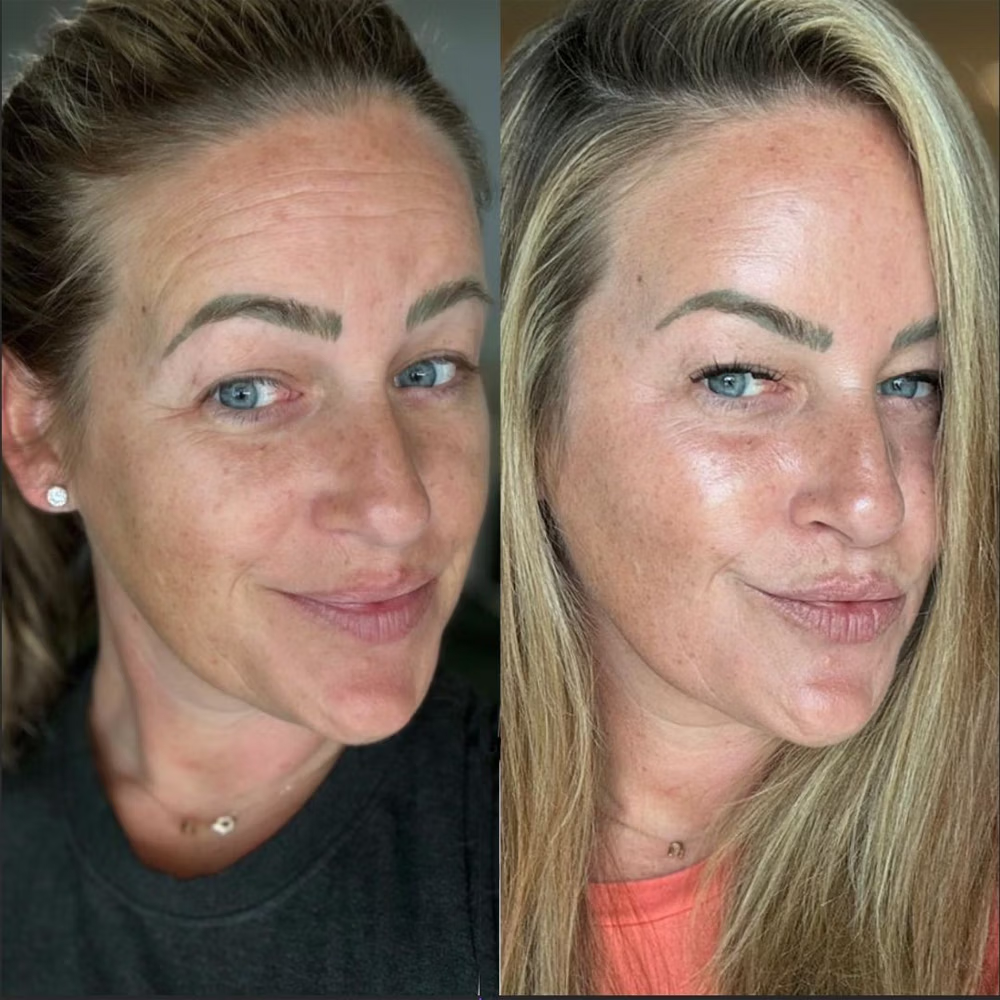
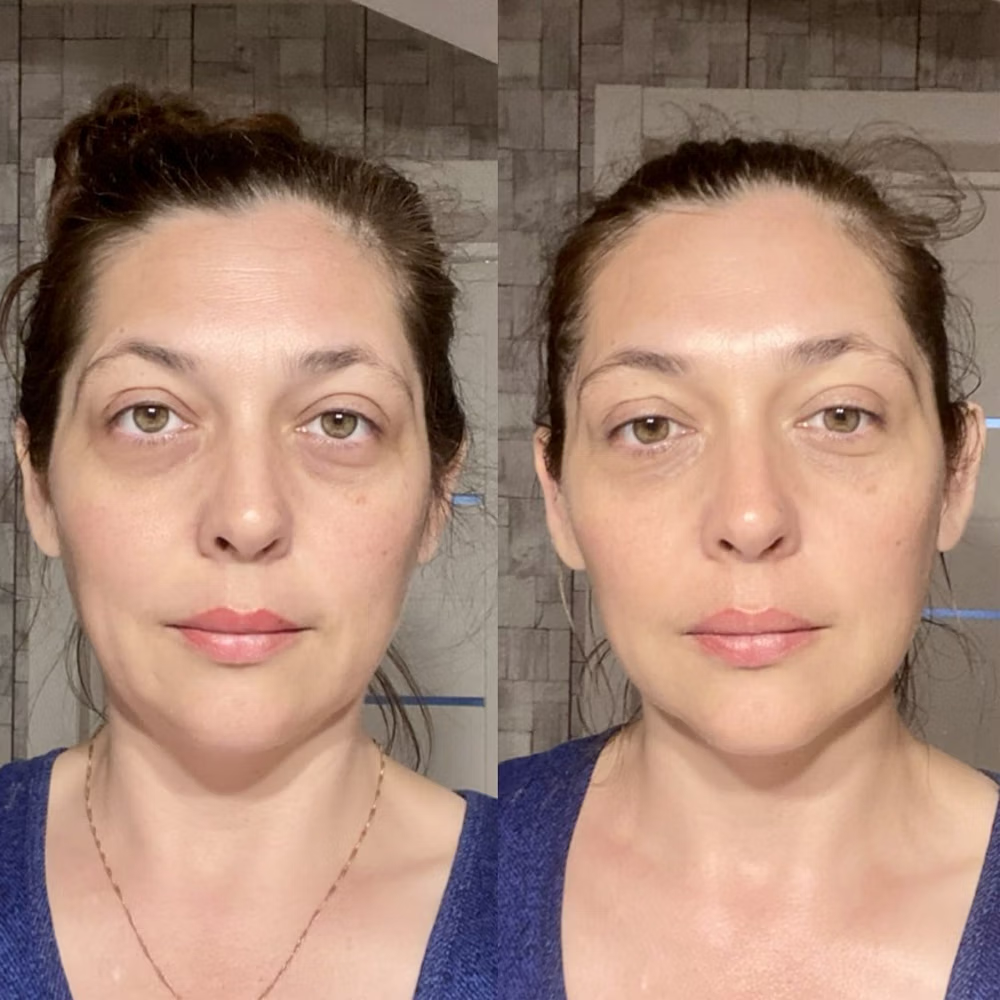
CLINICAL TRANSFORMATIONS

[ Molecular Radiance & Luminosity ]
[ Site-specific Blemish Neutralization ]
[ Cellular Longevity & Dermal Repair ]
[ Barrier-Synthesis & Volumization ]

the forensic architecture

collagen built from the inside out.

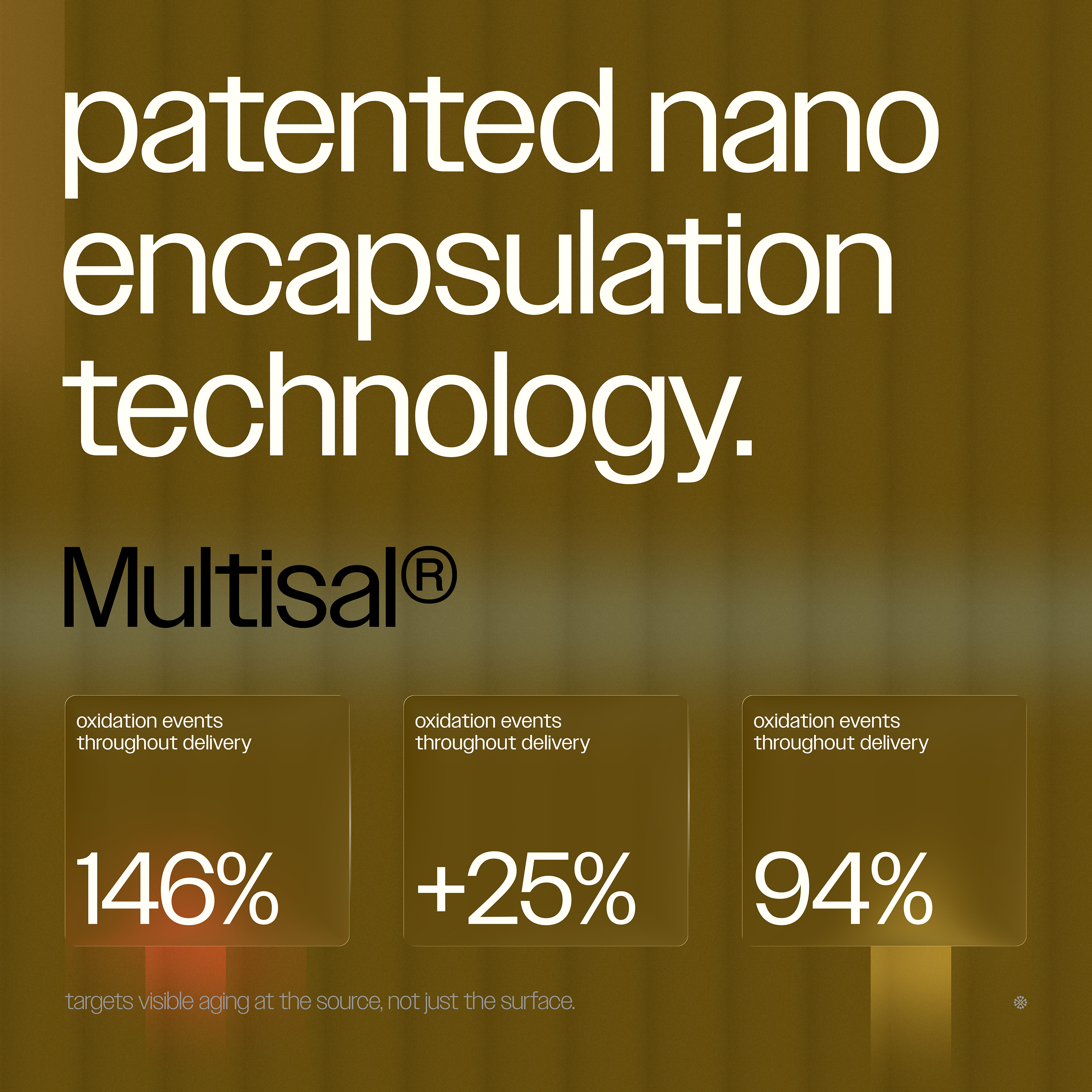
146%

oxidation events throughout delivery

+25%

oxidation events throughout delivery

94%

oxidation events throughout delivery

why every other vitamin c serum fails

collagen is made in your dermis. your vitamin c has never reached it.

ascorbic acid is hydrophilic. the stratum corneum is an organised lipid matrix. water-soluble molecules are not slowed or reduced by a lipid barrier — they are chemically repelled. no concentration of conventional vitamin c overcomes this incompatibility. the active sits on the surface, oxidises within hours, and generates the free radicals it was supposed to prevent.

multisal® encapsulates ascorbic acid in a lipid-compatible nano-carrier that traverses the stratum corneum, reaches dermal fibroblasts intact, and delivers vitamin c to the only cells capable of producing collagen. 146% greater vitamin c retention in skin tissue. published. measured. not modelled.

0

oxidation events throughout delivery

the ascorbic acid arriving at your dermal fibroblasts is chemically identical to the day it was encapsulated. for the first time, what you apply is what your skin receives.

the root cause analysis

every vitamin c serum you have ever used failed in exactly three ways.

not because the formula was poor. because the physics, chemistry, and cellular biology were never addressed. all three. simultaneously.

failure 01

Oxidation

ascorbic acid is chemically unstable. contact with air, heat, and light initiates oxidative decomposition — converting vitamin c into dehydroascorbic acid (dha), a potent pro-oxidant. the vitamin c serum you opened three weeks ago has lost meaningful potency. the serum you applied this morning began oxidising on contact with skin. dha generates free radicals — meaning conventional vitamin c can actively cause the oxidative damage it claims to prevent. the orange tint in your bottle is not a quirk. it is evidence of active degradation.

multisal solves this

ascorbic acid is sealed inside the multisal® lipid nano-carrier from manufacture to follicular delivery. zero air contact. zero dha formation. zero oxidation events. the vitamin c that arrives at your dermis is identical to the day it was made.

why every other vitamin c serum fails

Barrier Impermeability

the stratum corneum is not a membrane with holes. it is an organised lipid matrix — ceramides, cholesterol, and fatty acids arranged in bilayer stacks designed specifically to exclude water-soluble molecules. ascorbic acid is water-soluble. it is not slowed by this barrier. it is chemically repelled by it. no penetration enhancer, no low ph, no high concentration changes the fundamental incompatibility between a hydrophilic molecule and a lipophilic matrix. the vitamin c sits on the surface and washes off. the dermis — where fibroblasts live and collagen is made — is never reached.

multisal solves this

the multisal® nano-carrier has a lipid-compatible outer shell that works with the stratum corneum's lipid matrix rather than being repelled by it. the carrier enters, traverses, and delivers ascorbic acid to dermal fibroblasts. confirmed by published tape-stripping analysis.

why every other vitamin c serum fails

Cellular Energy Depletion

this is the failure point no other brand has identified. even in a hypothetical scenario where vitamin c reaches dermal fibroblasts, aging fibroblasts have measurably depleted atp reserves. atp is the energy currency of every cellular process — including the hydroxylation reactions required to assemble collagen. a fibroblast with 18% atp cannot execute collagen synthesis even when all the upstream signals are correct. the signal arrives. the cell has no energy to respond. this is why anti-aging serums produce diminishing returns with age — not because the actives stopped working, but because the cells stopped having the energy to act on them.

riboxyl solves this

riboxyl™ (d-ribose 1%) restores the atp substrate in depleted aging fibroblasts — from a measured 18% baseline to 94% at 6 weeks. the cells have the energy to respond when the collagen signal arrives. no other anti-aging formula addresses this.

riboxyl™ — the missing piece

your fibroblasts received the signal. they had no power to respond.

this is the failure point of every anti-aging formula that has ever existed — and the one no brand has addressed. the collagen synthesis signals are present. the vitamin c arrives (in some cases). the peptides bind to receptors. the aging fibroblast sits at 18% atp and cannot execute the synthesis it has been signalled to perform.

collagen assembly is an energy-intensive process. the hydroxylation of proline and lysine residues, the formation of the triple helix, the post-translational modifications — all require continuous atp expenditure. a depleted fibroblast with 18% energy reserves cannot execute this synthesis at a rate that produces measurable structural change regardless of how many collagen-stimulating signals it receives.

riboxyl™ is d-ribose — the 5-carbon sugar that forms the phosphate backbone of atp. applied topically at 1%, it enters fibroblasts via specific membrane transporters and is incorporated directly into the atp synthesis pathway. the published data is unambiguous.

why no other brand includes this

most brands have not solved the delivery problem first. when vitamin c does not reach the dermis, atp at the dermis is irrelevant — the synthesis signal that would require the energy never arrives. riboxyl™ is the ingredient you include when your delivery actually works. it is the logical extension of solving the physics problem.

fibroblast atp energy levels

aging fibroblast — no treatment

18%

conventional vitamin c serum

21%

riboxyl™ at 2 weeks

62%

riboxyl™ at 6 weeks

94%

encap c+ full protocol (12 weeks)

94% + 3× collagen signals

based on published lucas meyer riboxyl™ research on aging fibroblast populations. individual results vary.

the evidence

why enclir?

this is not a comparison of products. it is a comparison of what happens when the chemistry finally reaches the correct address.

performance metric

vitamin c reaches the dermis

zero oxidation throughout delivery

146% greater skin tissue retention

atp energy restoration for fibroblasts

3 independent collagen pathways activated

retinol-equivalent results, zero restrictions

dej structural reinforcement (cellynkage™)

published collagen outcome data (+25% type i)

pregnancy-safe formula

zero stinging / zero orange tint

conventional

Encap C+

People’s Observation

clinical feedback

“I’ve tried strong acids for years and always ended up with irritation. Protocol S+ was the first time my skin cleared while actually feeling calmer and more balanced.”

— Nadia R.

“What surprised me most was how stable my skin felt. Less redness, less oil fluctuation, and no peeling. It feels like my skin is functioning normally again.”

— Aisha K.

“Protocol C+ didn’t give me an overnight change — but after a few weeks my skin looked more rested and even. The texture improvement felt gradual and real.”

— Samira L.

“I appreciate that ENCLIR explains how things work instead of promising miracles. My breakouts reduced, and my skin no longer feels stressed after treatment.”

— Hana M.

“My skin reacts easily to most active products. With ENCLIR, I noticed improvement without the usual irritation cycle. It feels more like support than treatment.”

— Leena F.

the collagen timeline

what ninety days of delivered vitamin c builds.

days 1–7

The foundation activates

multisal® delivery is operational from application one. no stinging — confirms the encapsulation is intact. riboxyl™ begins atp substrate replenishment in fibroblast populations. no visible change expected. the molecular machinery is being restored before it can produce output.

weeks 2–4

First visible signals

skin texture begins improving as new keratinocytes from bakuchiol accelerated cell turnover reach the surface. radiance increases — not from surface gloss but from healthier cell architecture below. some users report skin feels "different" before they can articulate why. this is the collagen synthesis beginning.

weeks 6–8

Structure begins

fibroblast atp has reached 62% and rising. three collagen pathways are fully active. fine lines around eyes and mouth begin filling from below — not from temporary plumping but from new collagen fibril deposition. skin begins to resist mechanical stress differently. people who know your face may remark on something undefined.

week 12+

The structural shift

three complete skin cycles. +25% collagen type i increase is achievable per published multisal® clinical data. fibroblast atp at 94%. skin firmness, density, and elasticity are measurably different from baseline. this is not improved-looking skin. this is structurally rebuilt skin.

FAQ

Frequently asked questions.

stinging and colour change are both signs that vitamin c has oxidised — that the ascorbic acid is making surface contact in free-acid form and degrading. multisal® encapsulation seals the vitamin c from air, heat, and ph disruption from manufacture to dermal delivery. there is no free acid at the surface. there is no surface contact to cause stinging. the colour stability you observe is not cosmetic — it is proof that the active has not degraded. if your vitamin c serum is clear when you buy it and orange three weeks later, the active is gone.

this is the central question of the entire category. 20% ascorbic acid applied to a lipid barrier it cannot cross achieves zero dermal vitamin c delivery. the percentage is irrelevant when the molecule is blocked at the surface. 3% multisal® vitamin c that reaches dermal fibroblasts produces measurably greater collagen synthesis outcomes than 20% free ascorbic acid that does not. published data shows 146% greater skin tissue retention for multisal® vs. equivalent-concentration free ascorbic acid. bioavailability at the target tissue is the only metric that matters. concentration at the surface is not bioavailability.

riboxyl™ is d-ribose — the 5-carbon sugar that forms the phosphate backbone of atp. applied topically at 1%, it enters fibroblasts and is incorporated into the atp synthesis pathway, restoring energy reserves to near-youthful levels. aging fibroblasts at 18% atp cannot execute collagen synthesis even with perfect upstream signals. riboxyl™ solves this.

why doesn't anyone else include it? most brands have not solved the delivery problem first. when your vitamin c never reaches the dermis, atp at the dermis is irrelevant — the synthesis signal that would require the energy never arrives. riboxyl™ is the ingredient you include when your delivery works. enc/ir is, currently, the only consumer anti-aging brand where delivery works.

encap c+ contains bakuchiol — which has published pregnancy-safety evidence and is widely recommended as the retinol alternative for pregnant and nursing individuals. it does not contain retinol, retinoids, or any ingredient with established pregnancy contraindication.

however, the multisal® nano-delivery achieves vitamin c concentrations in skin tissue not comparable to conventional topical application. the deeper delivery mechanism has not been specifically studied in pregnant populations at scale. we recommend physician consultation before use during pregnancy — not because we know of a risk, but because the delivery architecture is different from what your physician's standard guidance is based on.

use encap c+ every evening for 90 days. at the end of the protocol, if you do not observe measurable improvement in skin firmness, fine line depth, texture, and radiance — email us at the address in your order confirmation. full refund processed within 48 hours. no photos. no forms. no questionnaire. no conditions attached.

we offer 90 days because collagen synthesis requires three complete skin cycles to produce structural, visible change. we are confident in the outcome because the mechanism is real and the data is published. the guarantee exists because we want you to have sufficient time to see what delivered vitamin c actually does — not because we are concerned about the refund rate.

Evidence Based Progression

CLINICAL TRANSFORMATIONS

[ Molecular Radiance & Luminosity ]
[ Site-specific Blemish Neutralization ]
[ Cellular Longevity & Dermal Repair ]
[ Barrier-Synthesis & Volumization ]

the forensic architecture

molecular architecture for skin that resolves.

3X

sa deposited at follicle wall

8hr

sustained release cycle

0

surface acid contact events

why conventional bha fails

acne lives at the follicle wall. your current treatment has never reached it.

the intercellular channel connecting your skin surface to the follicle wall is 13 nanometres wide. conventional salicylic acid particles measure 200–2,000nm. the smallest conventional particle is fifteen times too large to enter. every treatment you have used has acted on the surface of the problem, not its source.

salsphere® changes the geometry. at 100–200nm with lipid-compatible shell chemistry, the nano-spheres enter the intercellular channel, adhere to the follicle wall, and release salicylic acid there — over 8 hours — triggered only by the enzymatic signature of active inflammation.

13nm

intercellular channel width

the only physical route to the follicle wall. salsphere® is the only sa delivery engineered to fit.

the delivery architecture

why nano-encapsulation changes everything

five reasons your current formula is working against itself — and what changes when the chemistry finally reaches the correct address.

01

Protection from oxidation

the active inside a salsphere® shell is sealed from air, heat, and light from manufacture to follicular delivery. the sa reaching your pore wall is chemically identical to day of production. conventional sa begins degrading the moment it is formulated.

02

Controlled release

salsphere® releases over 8 hours via enzymatic trigger at the follicle wall. conventional sa bursts on contact within 30–60 minutes and is gone. sustained therapeutic concentration versus a single overwhelming shock.

03

Deeper penetration

at 100–200nm, salsphere® is the only sa delivery engineered below the 13nm intercellular threshold. 3× more sa deposited inside follicle walls versus free-form sa at equivalent concentration. published salvona technologies data.

04

Increased bioavailability

conventional sa follicle-wall bioavailability: effectively zero — blocked by geometry. salsphere® bioavailability at the follicle wall: 3× greater deposition. delivery architecture changed the entire efficacy calculation without changing the active.

05

Less irritation

when sa releases only inside inflamed follicles, there is no surface acid contact. no lipid stripping. no cytokine cascade. no barrier damage. no rebound oil. zero irritation is a mechanical certainty — not a formulation achievement.

the evidence

why enclir?

this is not a comparison of products. it is a comparison of what happens when the chemistry finally reaches the correct address.

performance metric

reaches follicle wall

enzyme-triggered release

zero surface acid contact

8-hour sustained release

barrier reinforcement during treatment

post-acne mark prevention (pih)

sebum quality correction

microbiome-aligned ph 5.5

3× published follicular deposition data

zero purging phase

conventional

Encap S+

90 days.
not 30.
because the biology
takes 90.

a 30-day guarantee is a mathematical trick. collagen cycles take 12 weeks. follicular normalisation requires three complete skin cycles. a brand offering 30 days knows you will not see full results in 30 days. the clock runs out before the answer arrives.

use encap s+ morning and evening for 90 days. if at any point in that window you do not observe measurable improvement — email us. that is the entire process.
  • full refund within 48 hours
  • no before-and-after photos required
  • no questionnaire or review period
  • one email. zero conditions.
  • we offer 90 days because we know you will not need it
People’s Observation

clinical feedback

“I’ve tried strong acids for years and always ended up with irritation. Protocol S+ was the first time my skin cleared while actually feeling calmer and more balanced.”

— Nadia R.

“What surprised me most was how stable my skin felt. Less redness, less oil fluctuation, and no peeling. It feels like my skin is functioning normally again.”

— Aisha K.

“Protocol C+ didn’t give me an overnight change — but after a few weeks my skin looked more rested and even. The texture improvement felt gradual and real.”

— Samira L.

“I appreciate that ENCLIR explains how things work instead of promising miracles. My breakouts reduced, and my skin no longer feels stressed after treatment.”

— Hana M.

“My skin reacts easily to most active products. With ENCLIR, I noticed improvement without the usual irritation cycle. It feels more like support than treatment.”

— Leena F.

FAQ

Frequently asked questions.

traditional salicylic acid releases on contact — flooding every pore, inflamed or not. salsphere® nano-spheres are inert on healthy skin and dissolve only in the presence of lipase and protease — the enzymatic signature of an actively congested pore. healthy pores receive nothing. inflamed pores receive 8 hours of controlled sa at the follicle wall. this is not a gentler version of conventional bha. it is a categorically different delivery model.

no — and the reason is mechanical, not a formulation improvement. skin dryness from sa has one cause: surface acid contact stripping the stratum corneum lipid matrix. when sa is encapsulated and releases only inside inflamed follicles, there is no surface acid contact. the mechanism that produces dryness does not occur. simultaneously, 1% ectoin actively reduces transepidermal water loss. most users see improved hydration within two weeks.

post-inflammatory hyperpigmentation is a melanin synthesis event driven by the tyrosinase enzyme. azeclair™ at 2% inhibits tyrosinase from week one — suppressing melanin synthesis at the site of active inflammation before the mark reaches full intensity. this is prevention-first, with correction of existing marks occurring in parallel. clearance and correction in a single application.

the roman chamomile hydrosol base at 20% replaces petroleum-derived solvent carriers. the salsphere® lipid nano-spheres undergo enzymatic biodegradation inside inflamed follicles — no synthetic microparticle residue. no phthalates, parabens, mineral oils, or synthetic fragrance. every ingredient was selected for a defined biological function. the absence of filler chemistry produces the absence of filler-chemistry environmental impact.

days 1–7: no purging. reduced surface oil by day 4–5. ectoin reinforcement active immediately.

weeks 2–4: active blemishes resolve faster. new blemish frequency declines. marks begin fading.

weeks 6–8: sebum composition normalising. pih measurably lighter. breakouts down 50%+.

week 12+: three complete skin cycles. follicular environment structurally changed. skin does not behave like acne-prone skin. we offer 90 days because this is the correct timeline.